
How to use this list
The quantities are a starting point for the first few months, not a shopping rule. Use the pregnancy filter to recalculate only what really needs to increase: crib, mattress, clothes and infant car seat are per baby; baby bathtub, double stroller, thermometer and organizers can be shared.
Tap the plus sign next to each product to see why it is suggested. Then adjust the list to the climate, the space in your home, how often you do laundry, the babies' estimated size and what the family already has, can borrow or prefers to buy secondhand.
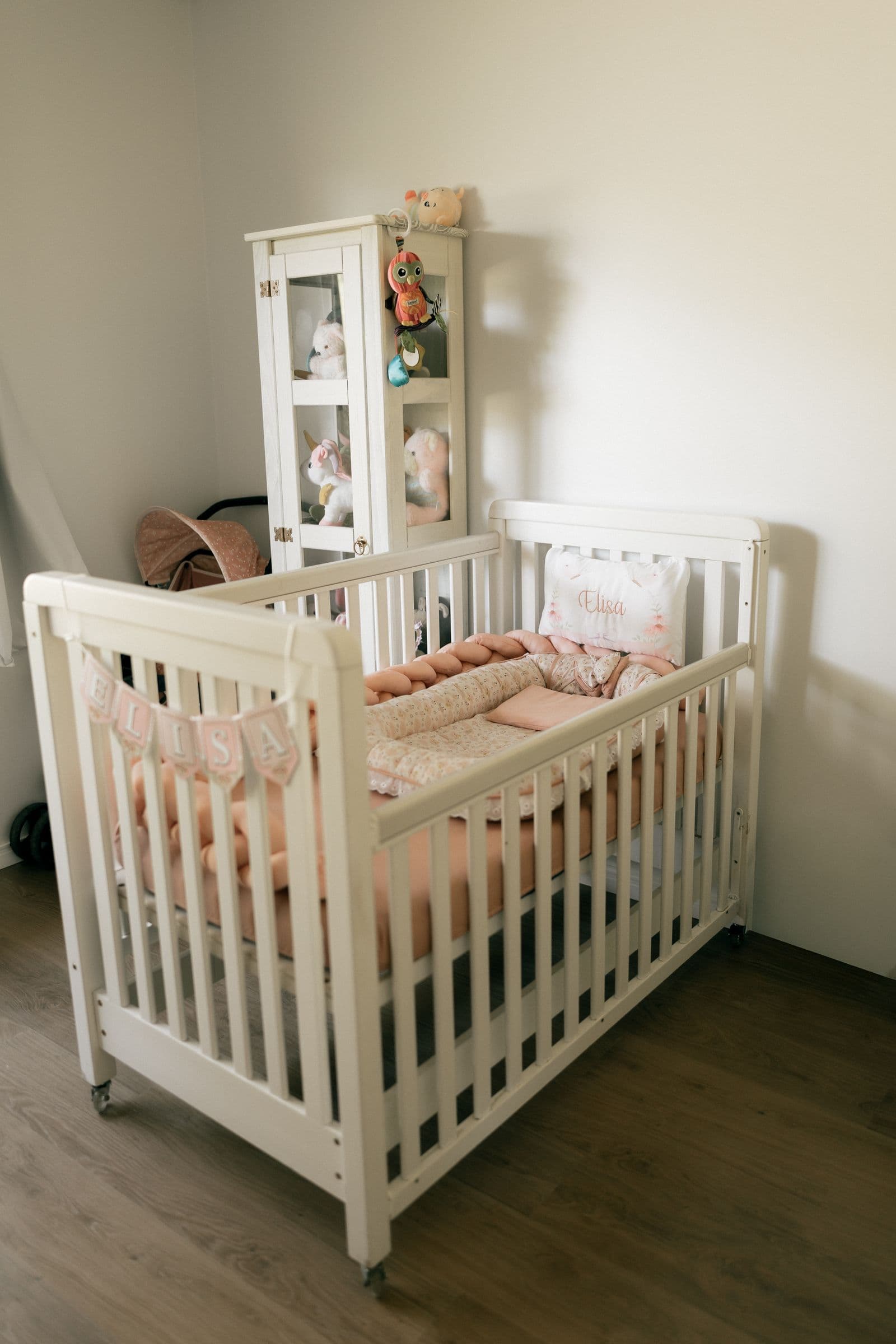
Safe sleep changes what goes on the list
To sleep, a baby needs a firm, flat, separate surface with a fitted sheet. Pillows, comfort blankets, crib bumpers, positioners, cushions and loose blankets stay off the list: the Brazilian Society of Pediatrics and Brazil's Ministry of Health warn about the suffocation risk of these items.
With twins, sharing a room can make care easier, but sharing the same sleep surface is not recommended. That's why a crib or other approved sleep space, mattress and sheets are calculated per baby.
Safety before looks
Cribs, strollers and child restraint devices have compliance requirements in Brazil. Before color, fabric or accessories, check the Inmetro (Brazil's product certification body) registration and seal, weight and height limits, the installation manual and how it fits the family's routine.
An infant car seat is needed per baby when you travel by car. The twin stroller, on the other hand, appears as one unit because it is a single product with two seats — a good example of why not everything should simply be doubled.
Feeding doesn't come in a ready-made bundle
Bottles, breast pumps and storage containers appear as optional because they depend on how the baby is fed and on real need. Brazil's Ministry of Health recommends exclusive breastfeeding for the first six months whenever possible and does not recommend routine use of bottles and pacifiers. When another way of offering milk is needed, the baby's care team or a Human Milk Bank can guide choices and hygiene.